If your home was built between 1978 and 1995, there is a good chance the grey pipe behind your walls is Poly B — and every one of those systems is now past the service life it was designed for. We replace it with PEX-A, pull the permit, and hand you the paperwork your insurer asks for.
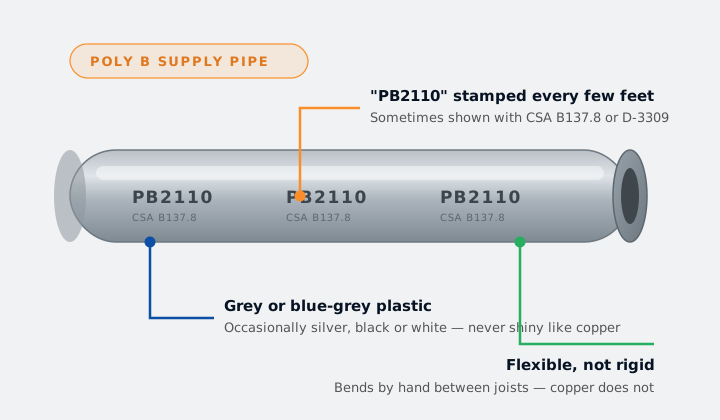
Poly B — short for polybutylene — is a flexible grey or blue-grey plastic water supply pipe. It arrived in Canada in 1978 as a cheap, fast alternative to copper, and for about seventeen years it went into an enormous number of houses, townhomes and condos across the Lower Mainland. It was used until roughly 1995.
It is not the drain pipe under your sink and it is not the black poly line running to your irrigation. Poly B is the pipe carrying pressurised hot and cold water to every fixture in the house, and it is usually stamped PB2110 every few feet.
The problem is not the idea. The problem is what municipal water does to the material over time.
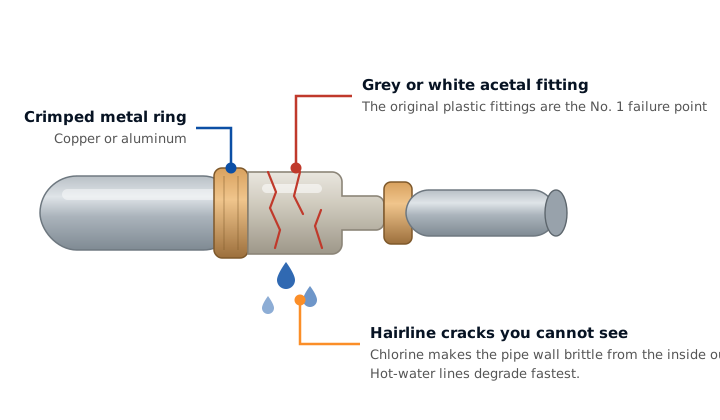
Chlorine and other disinfectants in treated municipal water react with polybutylene. Over years, the inner wall of the pipe becomes brittle and develops microscopic cracks. Those cracks grow. Nothing about this is visible from the outside — the pipe can look completely normal right up until it splits.
The original fittings made it worse. Poly B was joined with grey or white acetal plastic insert fittings held by a crimped metal ring, and those fittings are the single most common failure point in the system.
Any one of these is worth an assessment. Two or more, and you are on borrowed time.
A brown ring or a soft patch of drywall below a bathroom is very often a supply line, not the fixture.
Once you have fixed two or three, you are not dealing with bad luck. You are watching a system fail in sequence.
Flaking from the degraded inner wall can restrict flow, and pressure that falls off while a tap runs is a flag.
Cloudy, grey or flaked water after the system has sat unused overnight is worth having looked at.
Where the pipe is visible — at the tank, in the crawlspace — chalky or darkened plastic is a bad sign.
Increasingly the first real warning is a renewal notice asking about your plumbing. Here is what that means.
A repipe is a construction project, not a service call, and the difference between a good one and a bad one is almost entirely in the planning. Here is how we run it.
Most Metro Vancouver homes are a two to five day job. A compact townhome with one bathroom can finish faster; a larger house with several bathrooms and a finished basement runs longer. We give you a date range in writing before we start, not a vague estimate.
Most Metro Vancouver Poly B replacements land somewhere between $6,000 and $15,000, driven by the size of the home, the number of bathrooms, and how accessible the runs are.
See the Full Cost Guide →For years, Poly B was a problem you could ignore until it leaked. That is changing fast in British Columbia. Insurers now treat Poly B as a known water-damage risk, and homeowners are seeing higher premiums, much higher water-damage deductibles, demands for an inspection report — and in some cases an outright exclusion or a refusal to renew.
Replacement resolves it. Once the Poly B is out and the work is documented, coverage eligibility comes back and premiums commonly fall.
Poly B & Insurance in BC →We will tell you whether it is Poly B, what condition it is in, and what replacement would cost. No charge, no pressure.